Learning through Experience Makes Everything More Sticky
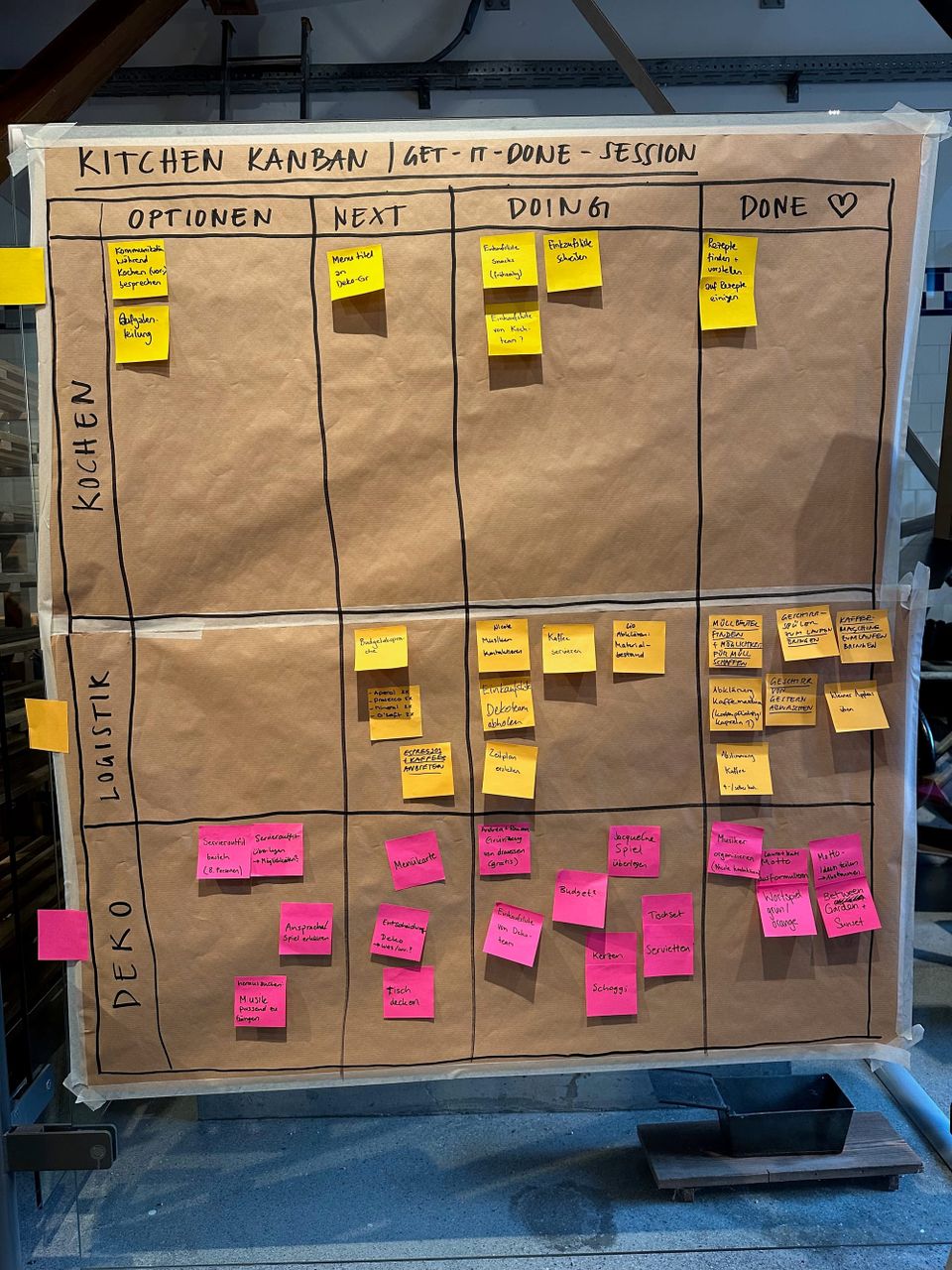
Since many years, I accompany teams and whole departments in setting up Kanban Systems to improve their flow and their collaboration.
At the beginning, I tried to teach Kanban first in a theoretical setting, by talking about the principles of Kanban, the related practices and the different use-cases.
We also usually set up a first Kanban Board or a whole Kanban System made up of several boards who were connected in some way.
That was not bad and often worked, but it also often did not work.
One of the things I heard most often from teams after such a Kanban intro: «Yeah, this probably works for other companies, but in our case... (followed by some strange excuse why Kanban was not applicable in this environment.
I got frustrated and was looking for a way of making Kanban tangible through other ways than classical teaching. And when I spoke with a friend who works in gastronomy I had an idea: I could just invite the team to cook a meal together using a kanban board as their tool to divide and structure the work, and then, while enjoying the meal, everyone could talk about what had happened and how this could be applicable to their normal work.
So, I invented «Kitchen Kanban». It's a format where the experience of Kanban is in the center, not the theory. Once people see and feel the benefits of Kanban, they are also open to learn more about it theoretically.
Below I share some images and explanations of a Kitchen Kanban session with a group of 40 teachers in Switzerland.
And after those images, I will give you a few hints about how to create experiences for people rather than teaching them something. Not just for Kanban, also for other things you are trying to setup or grow.
If you become a paying subscriber of this newsletter, I am offering the first 3 subscribers a free Kitchen Kanban session for a team of up to 8 friends or colleagues. The deal: You find a kitchen and provide the budget for eating, and I guide you through the whole session and tell you more about Kanban at the end of the meal. Offer valid for sessions in Continental Europe.
And for all existing subscribers or subscribers who are not making the cut of the first three, I will be sharing the instructions for a Kitchen Kanban Session so you can plan your own if you want.
So, this is how a Kitchen Kanban Session works in action, here with the example of 40 teachers of one school in Switzerland. This is a rather large group, normally, I work with groups of up to 20 people. But it worked like a charm!
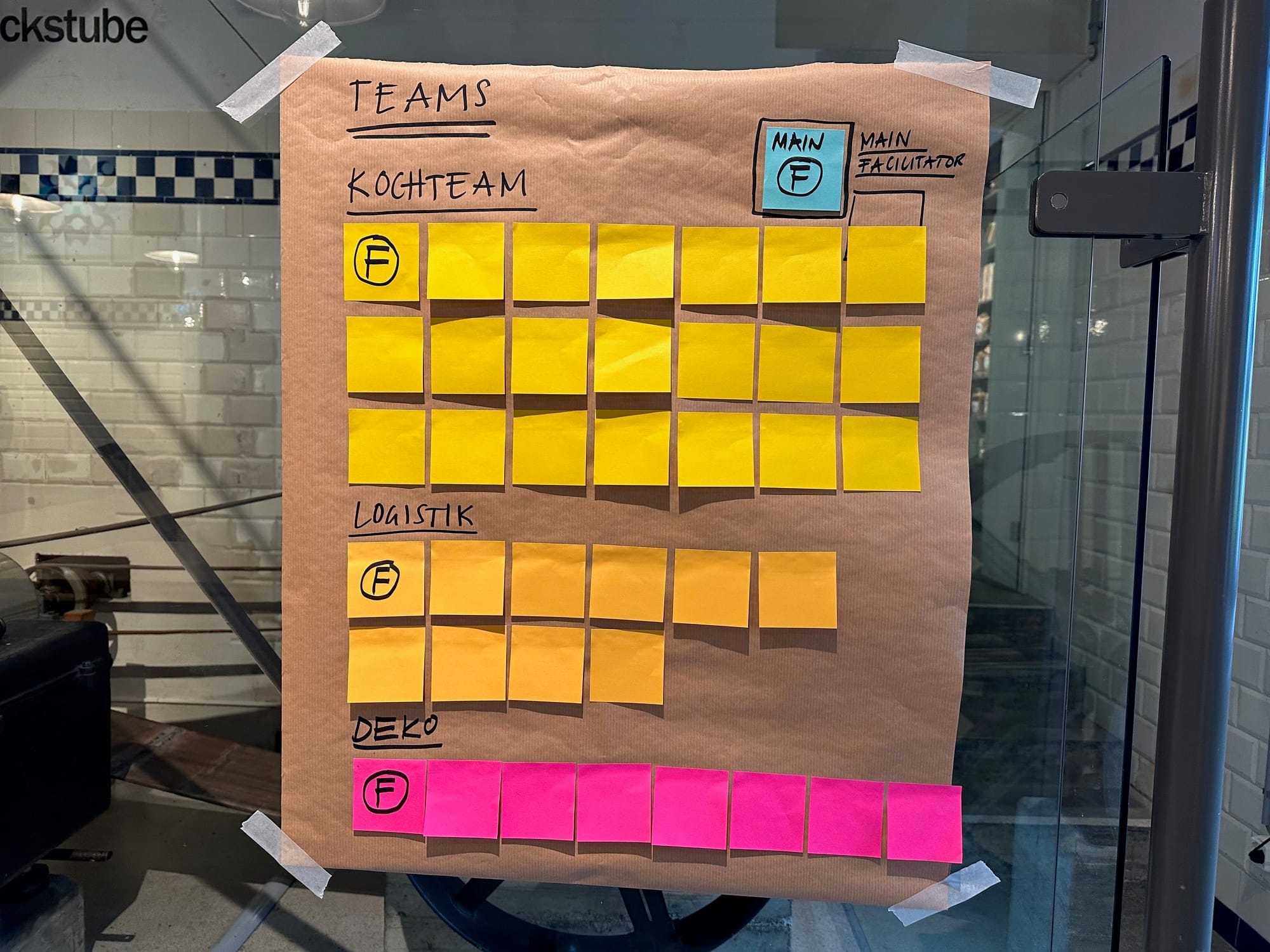
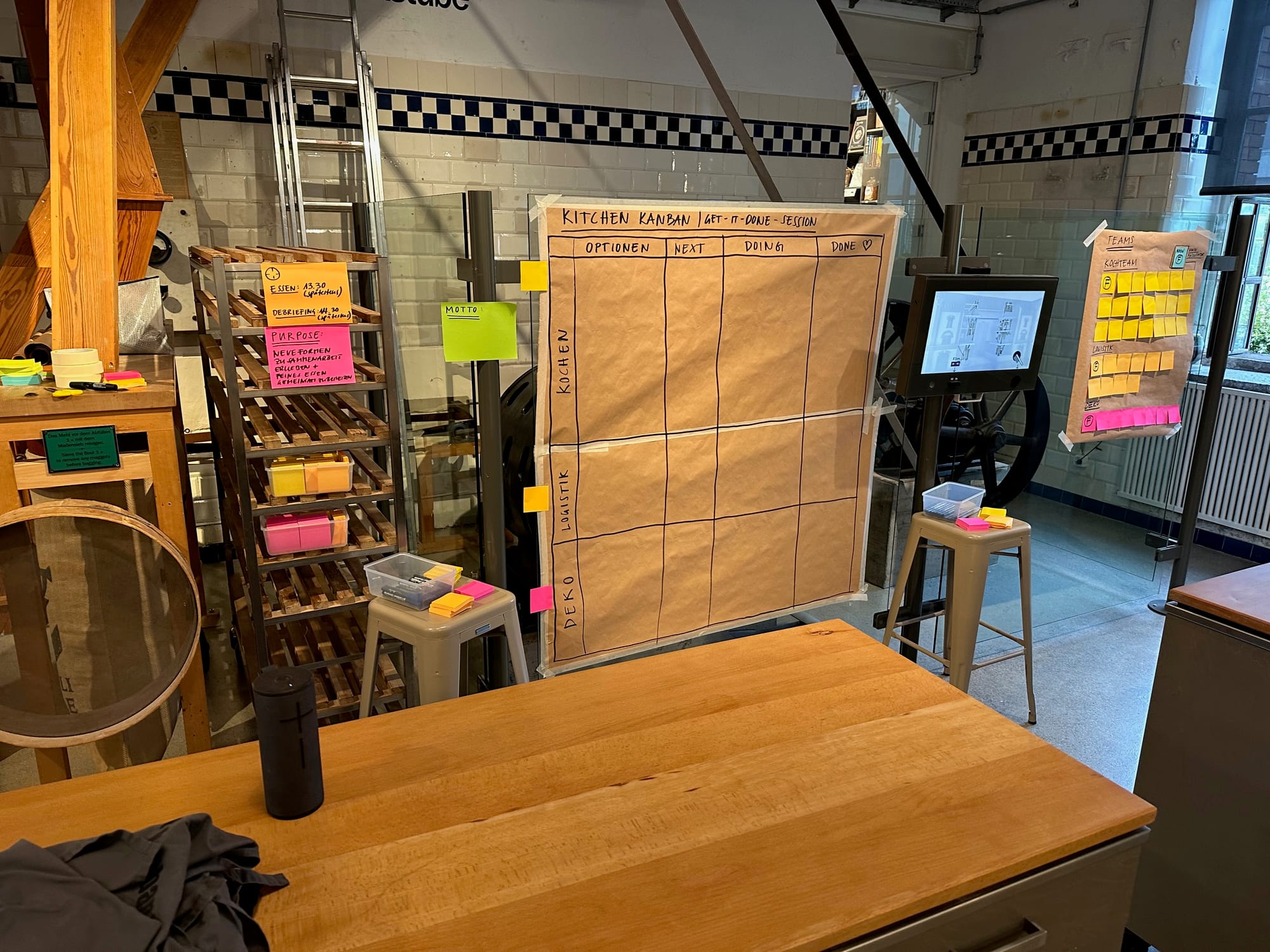
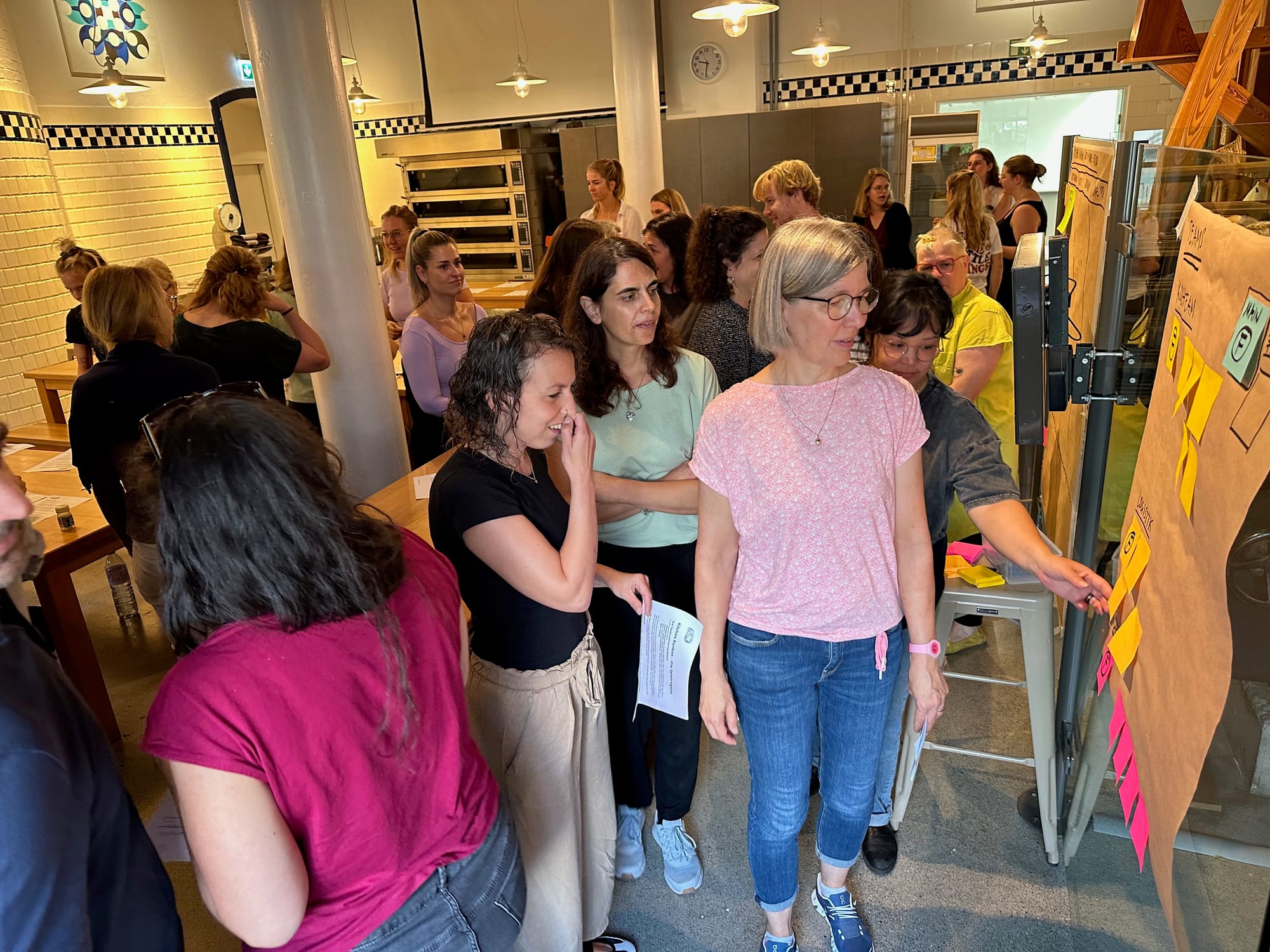
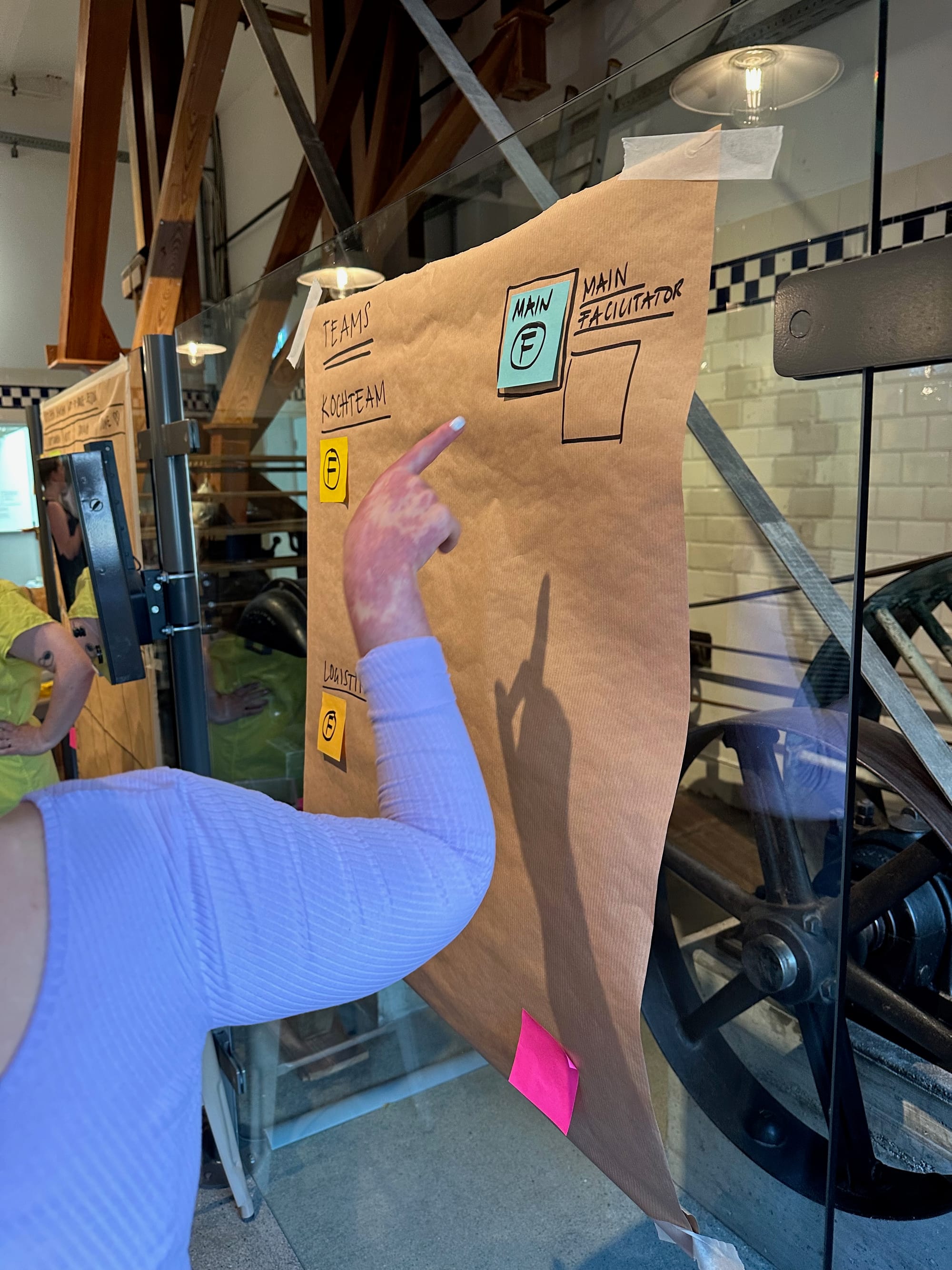
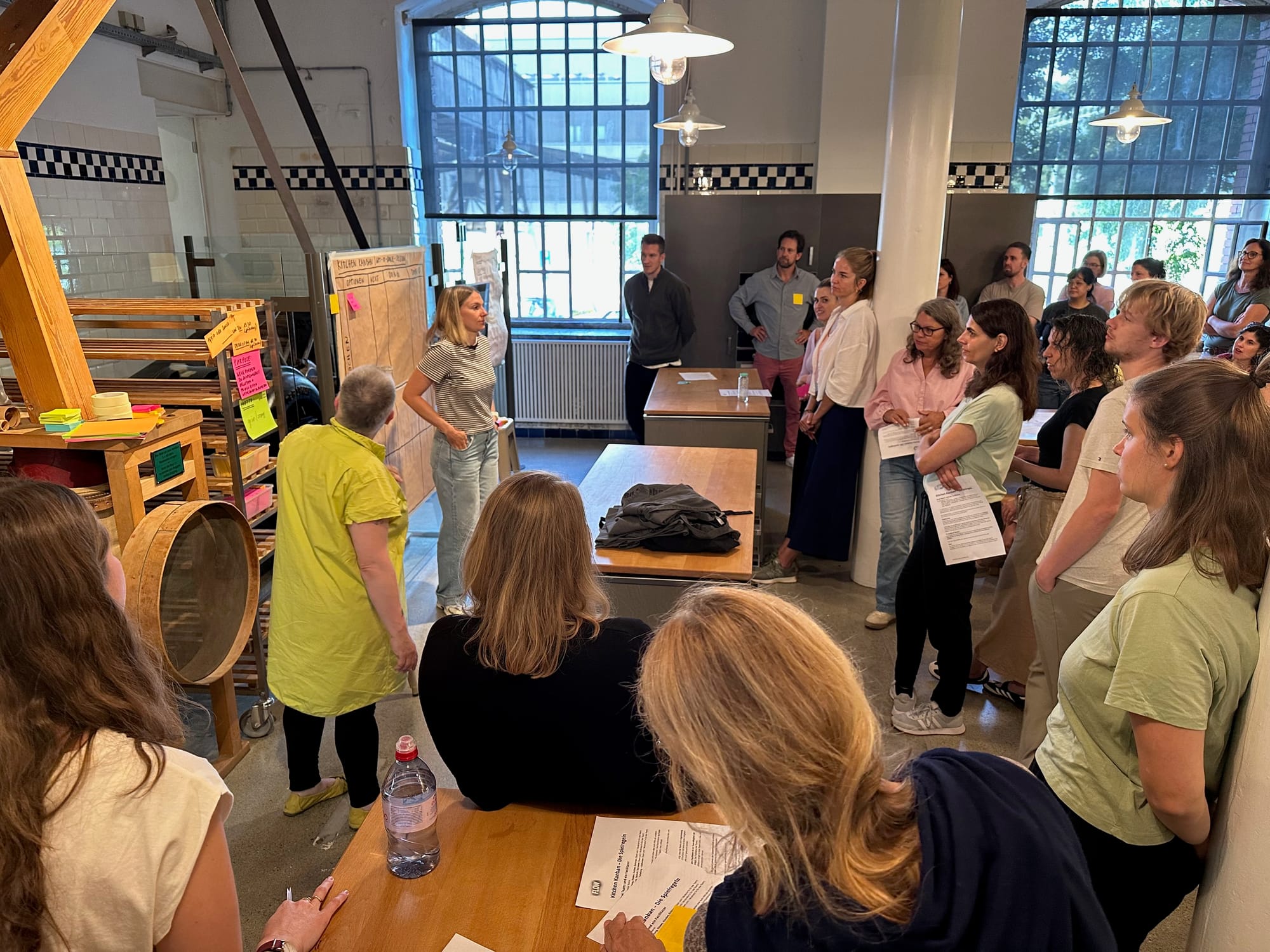
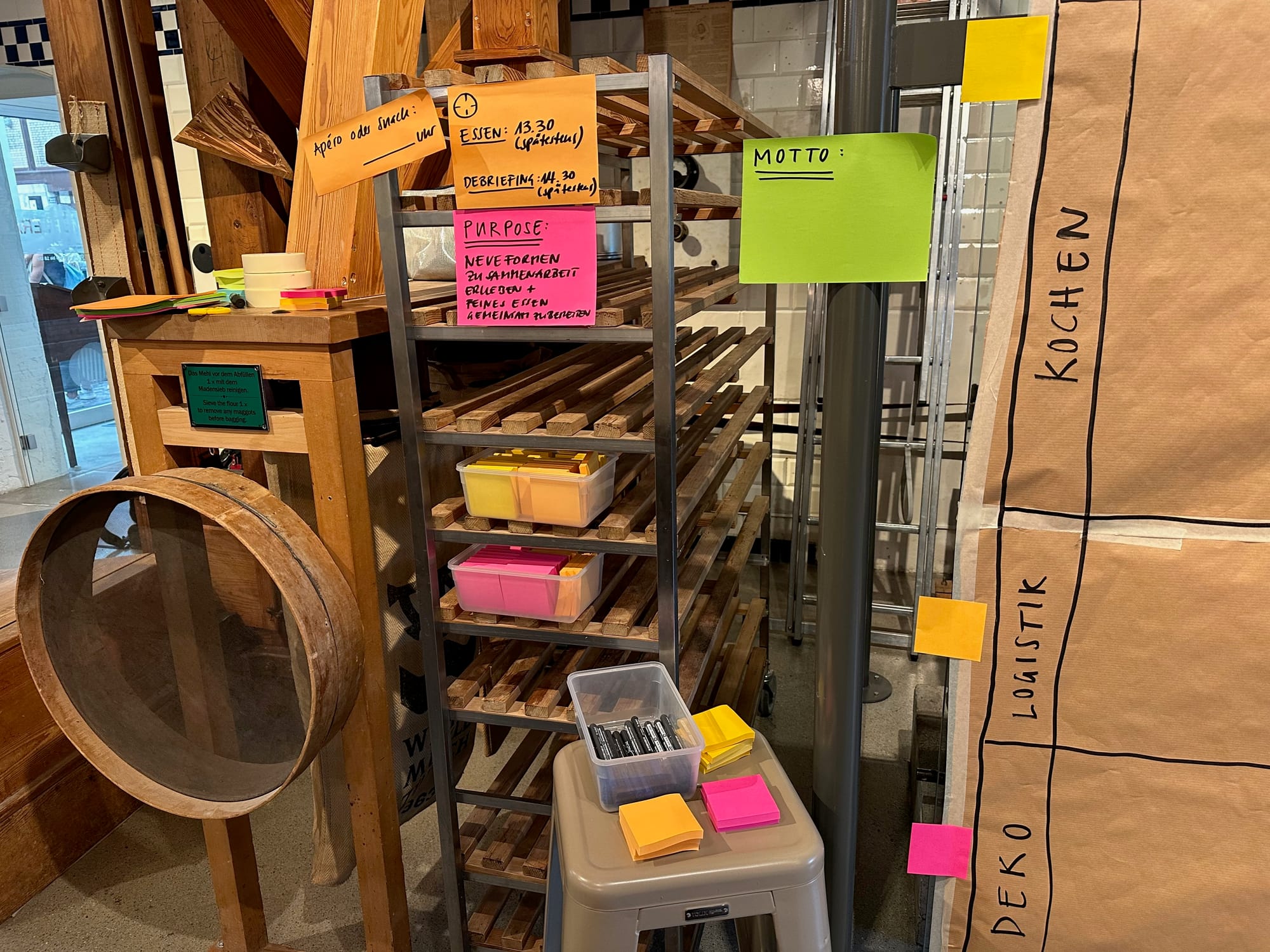
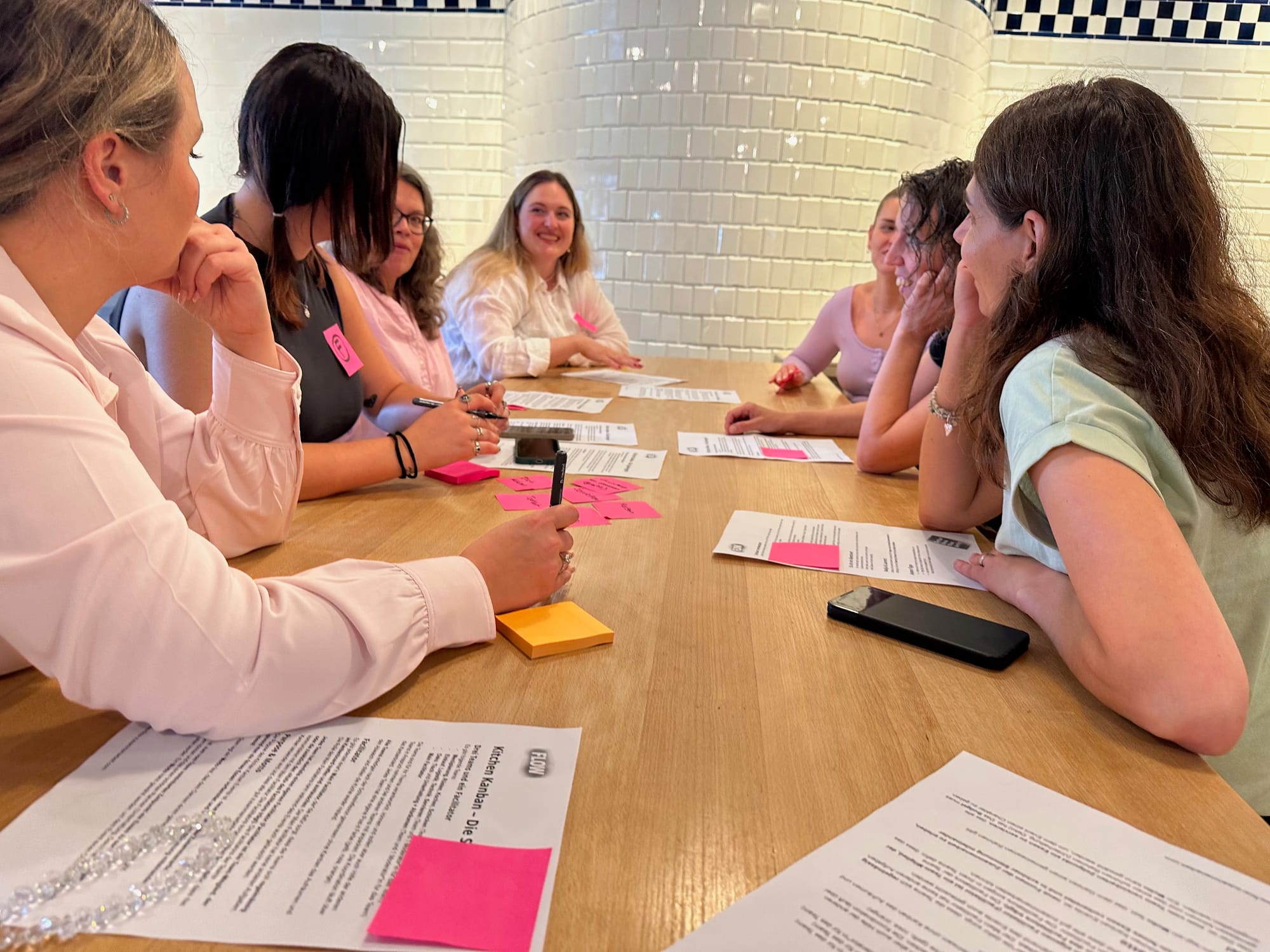
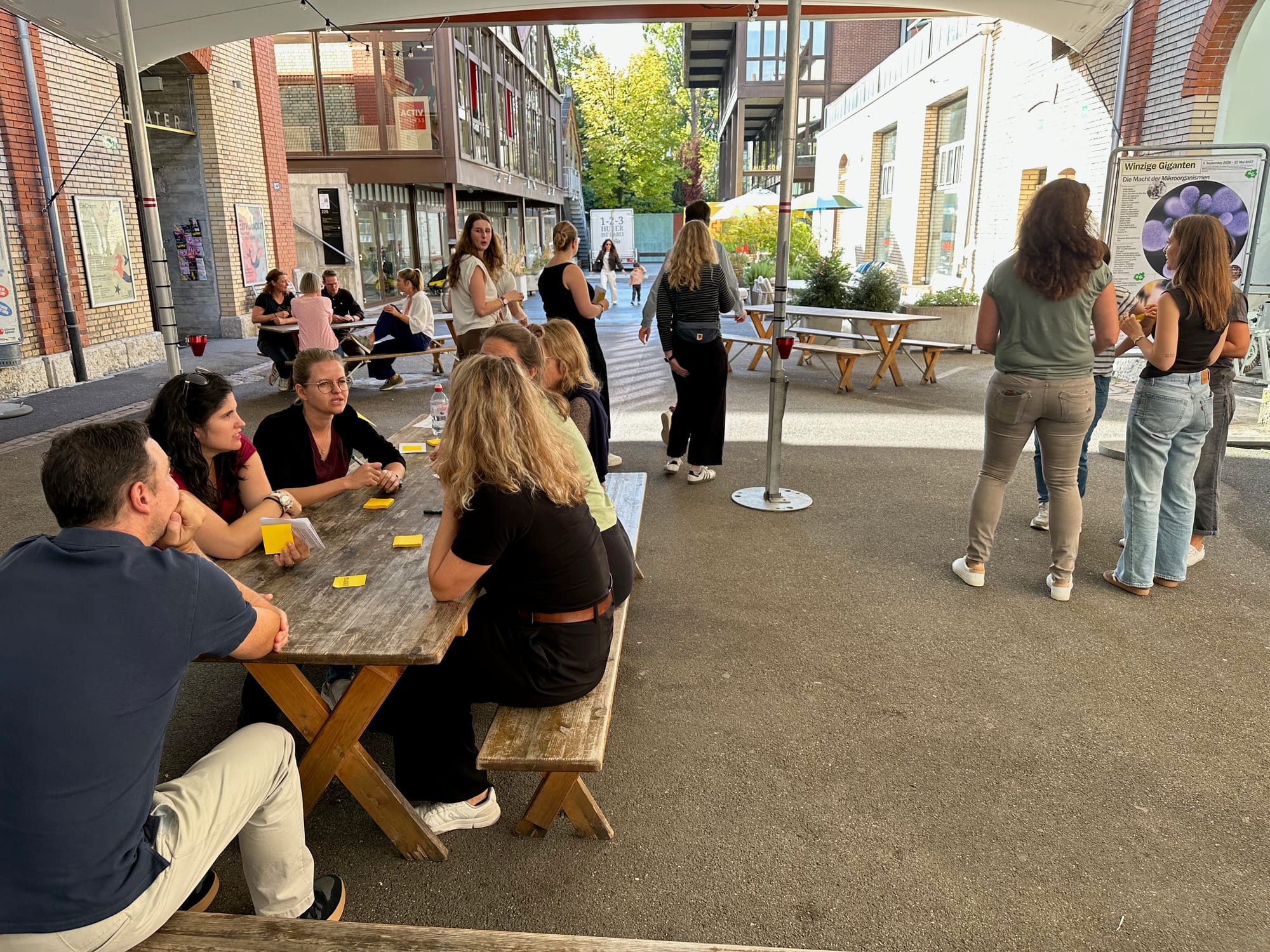
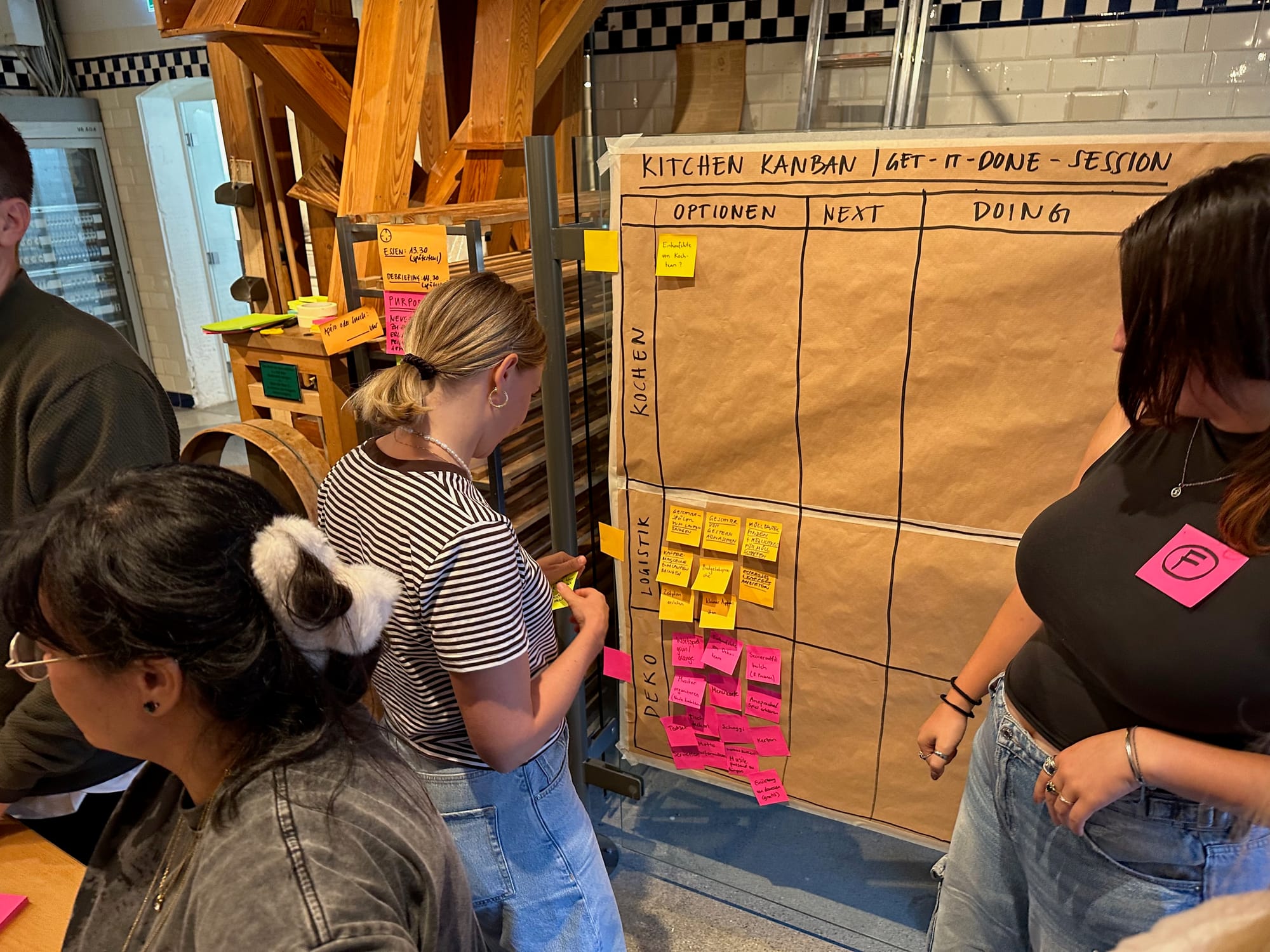
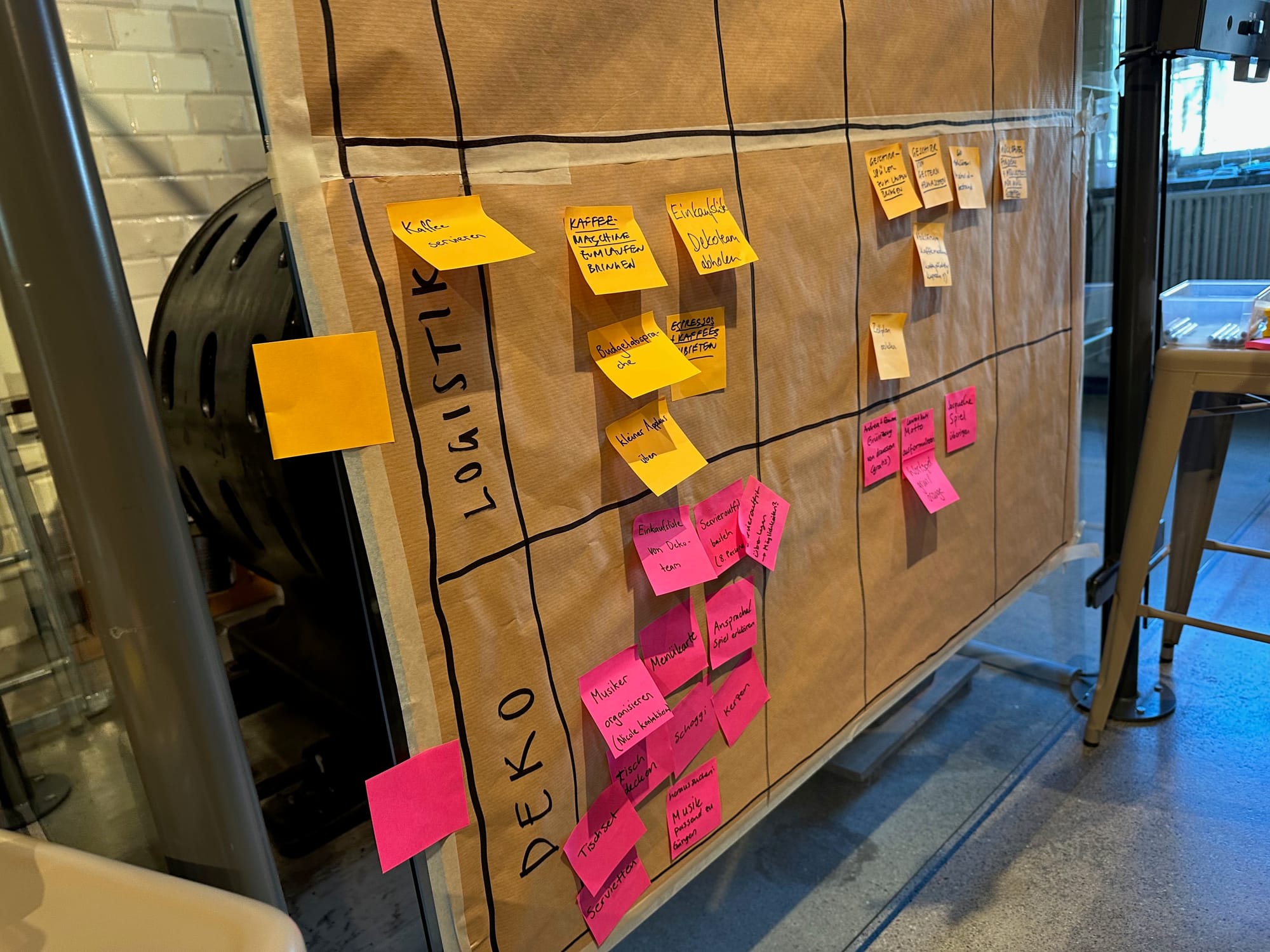
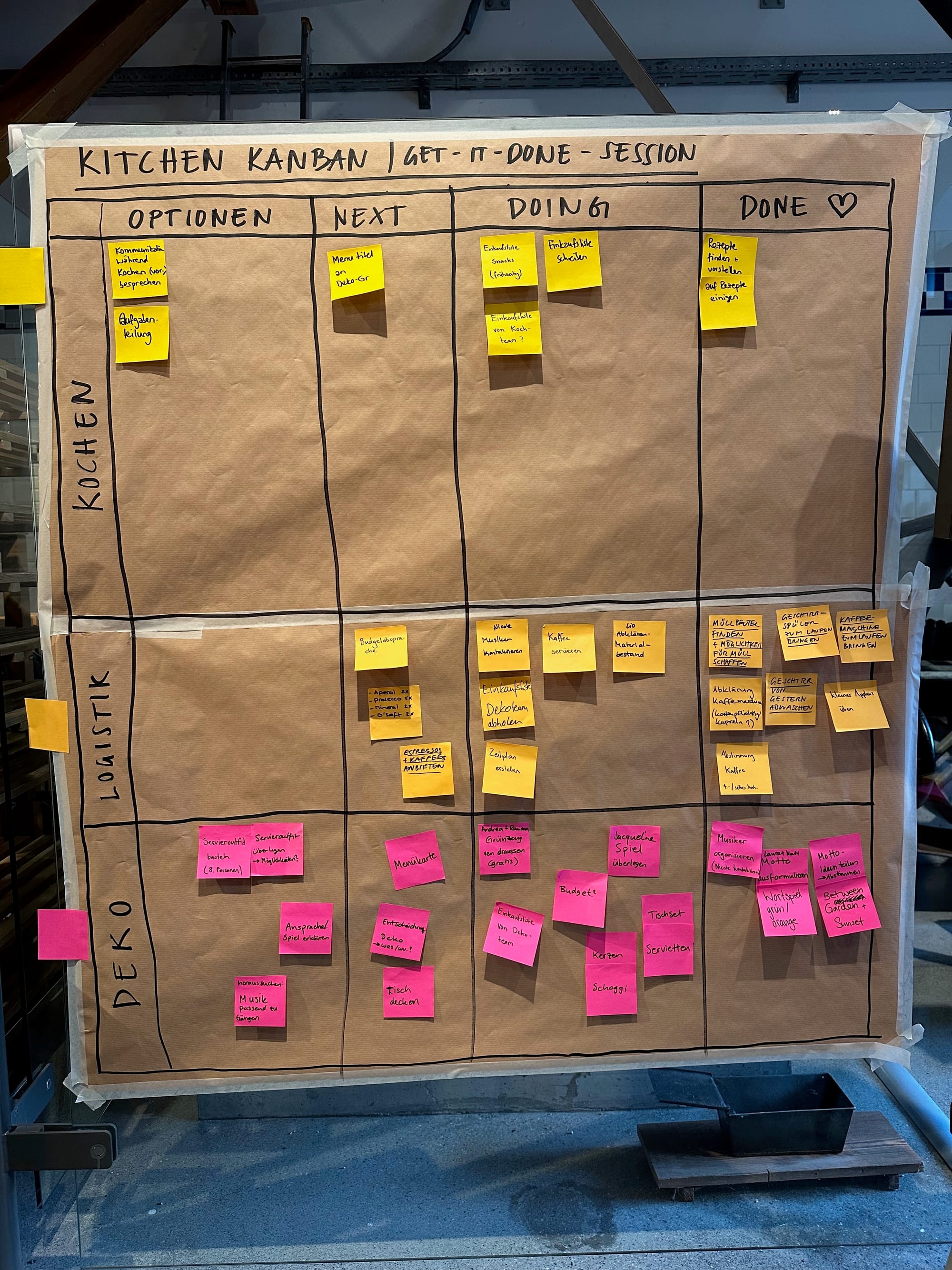
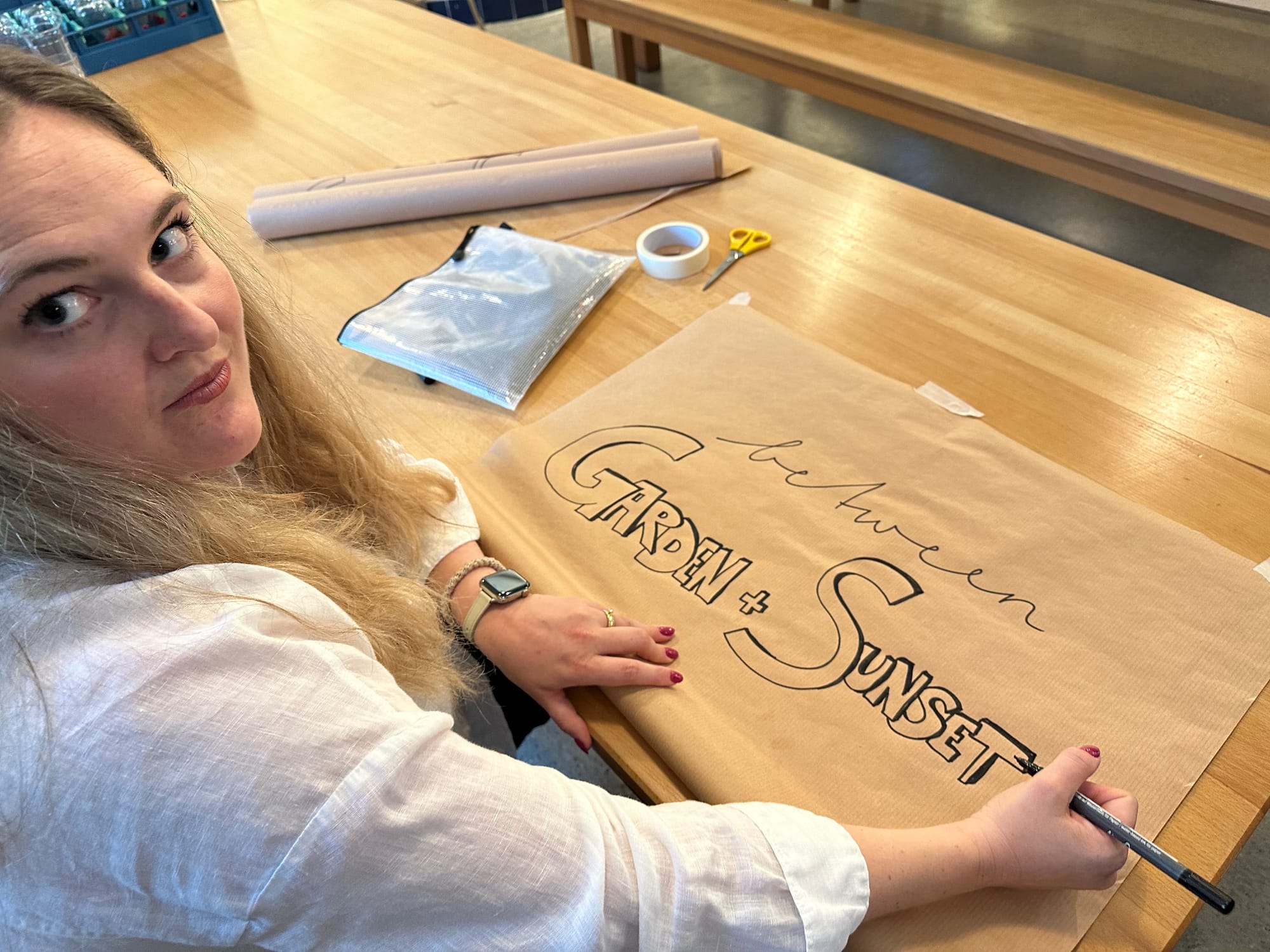
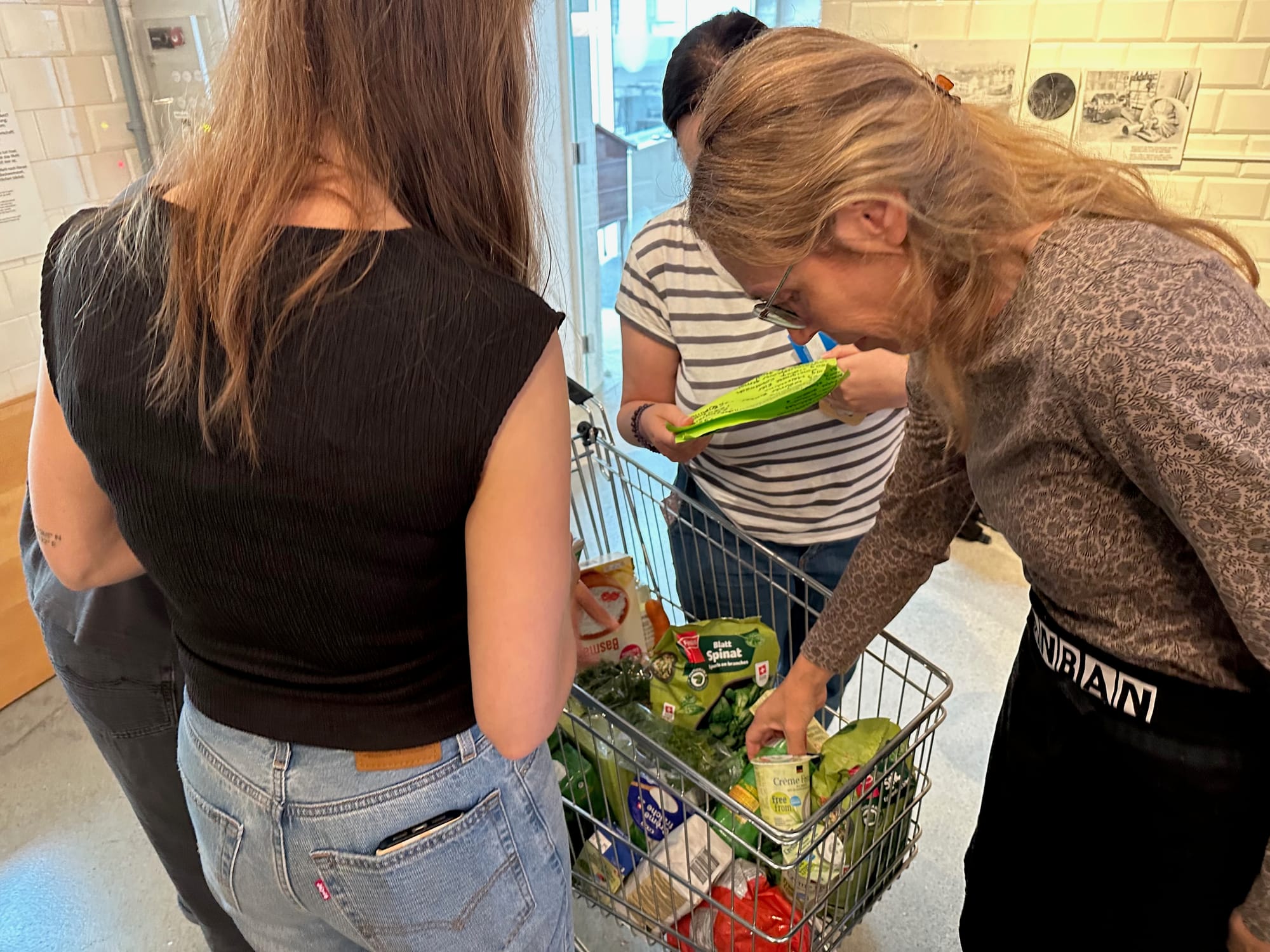
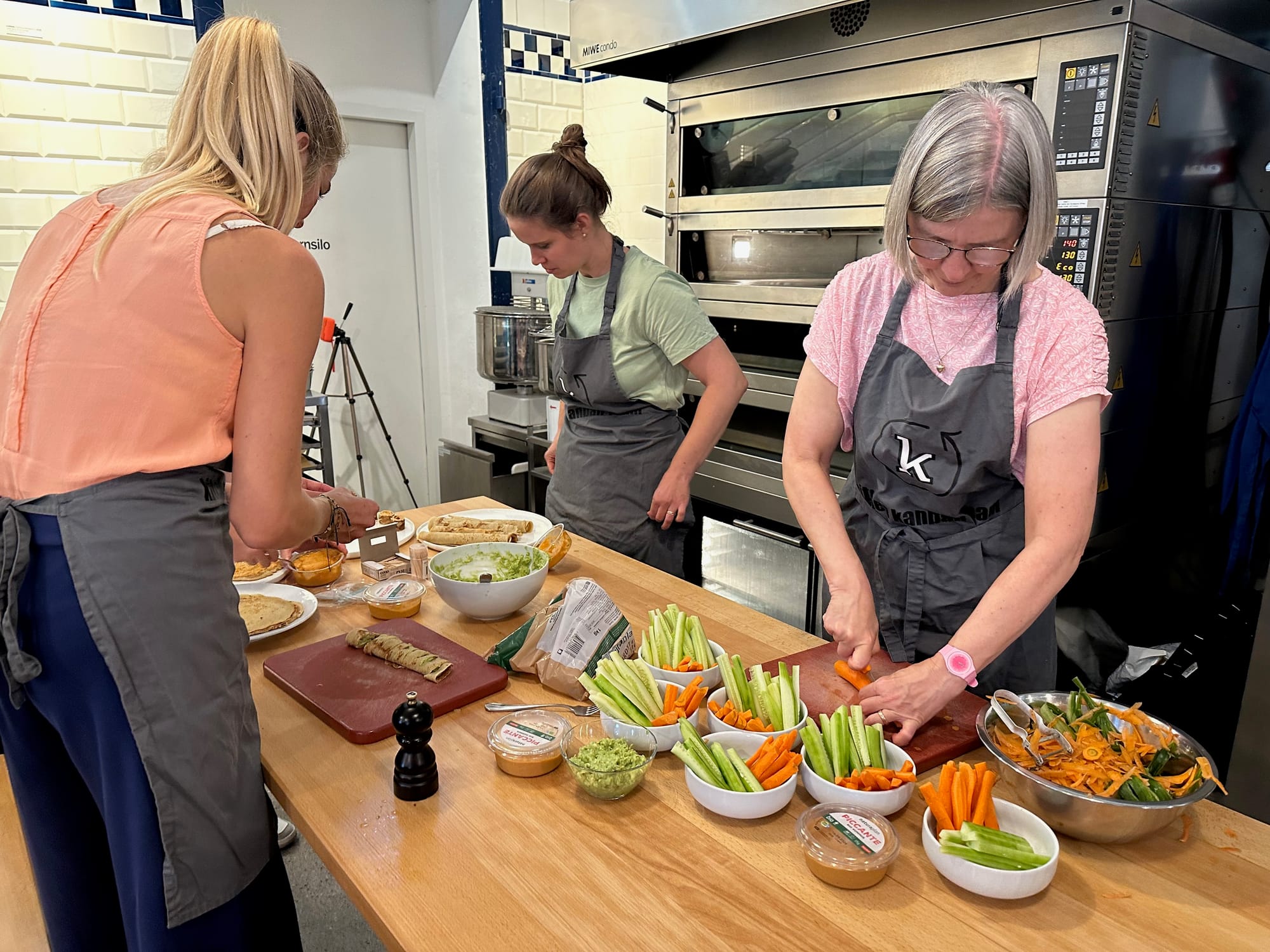
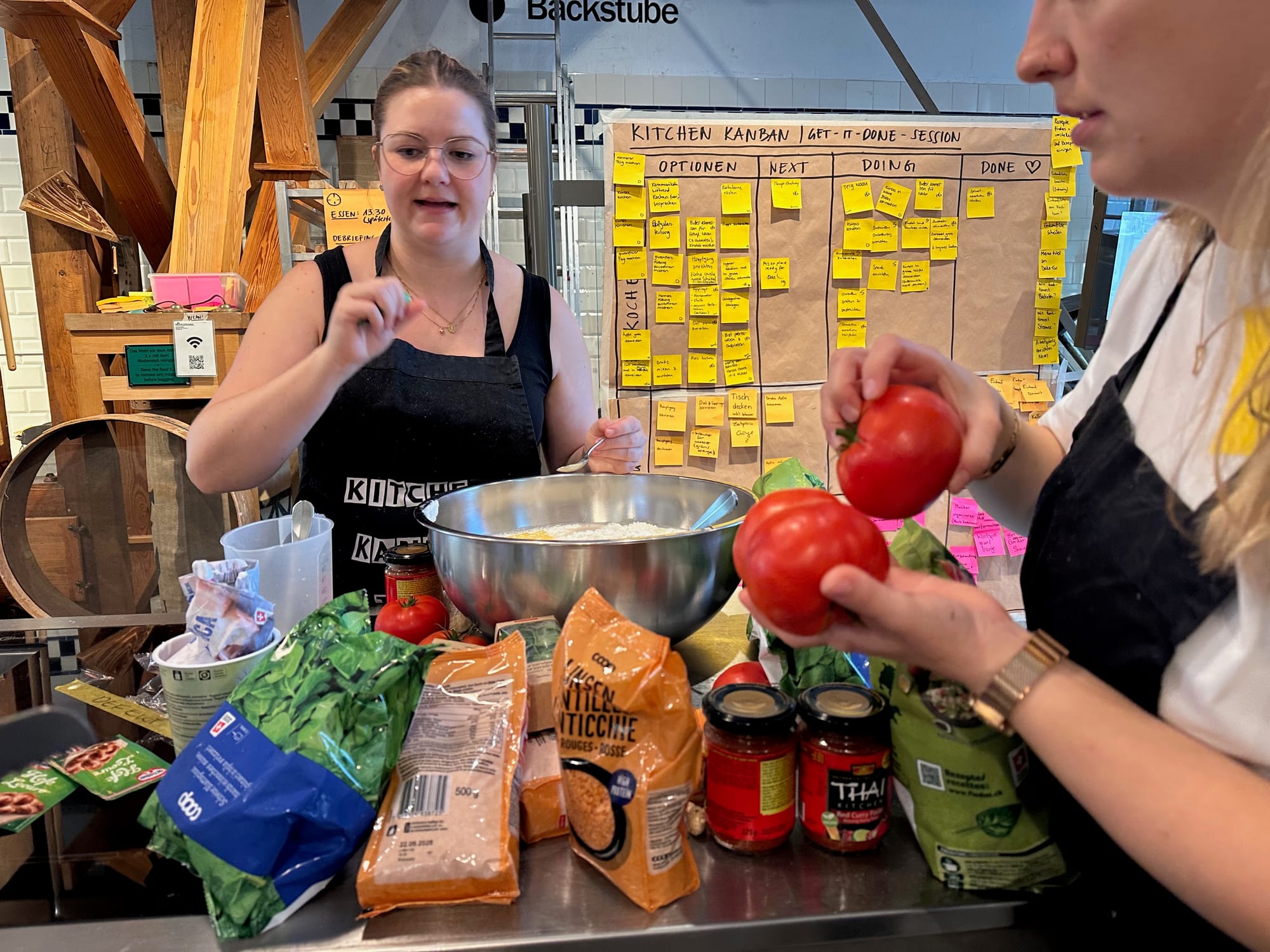
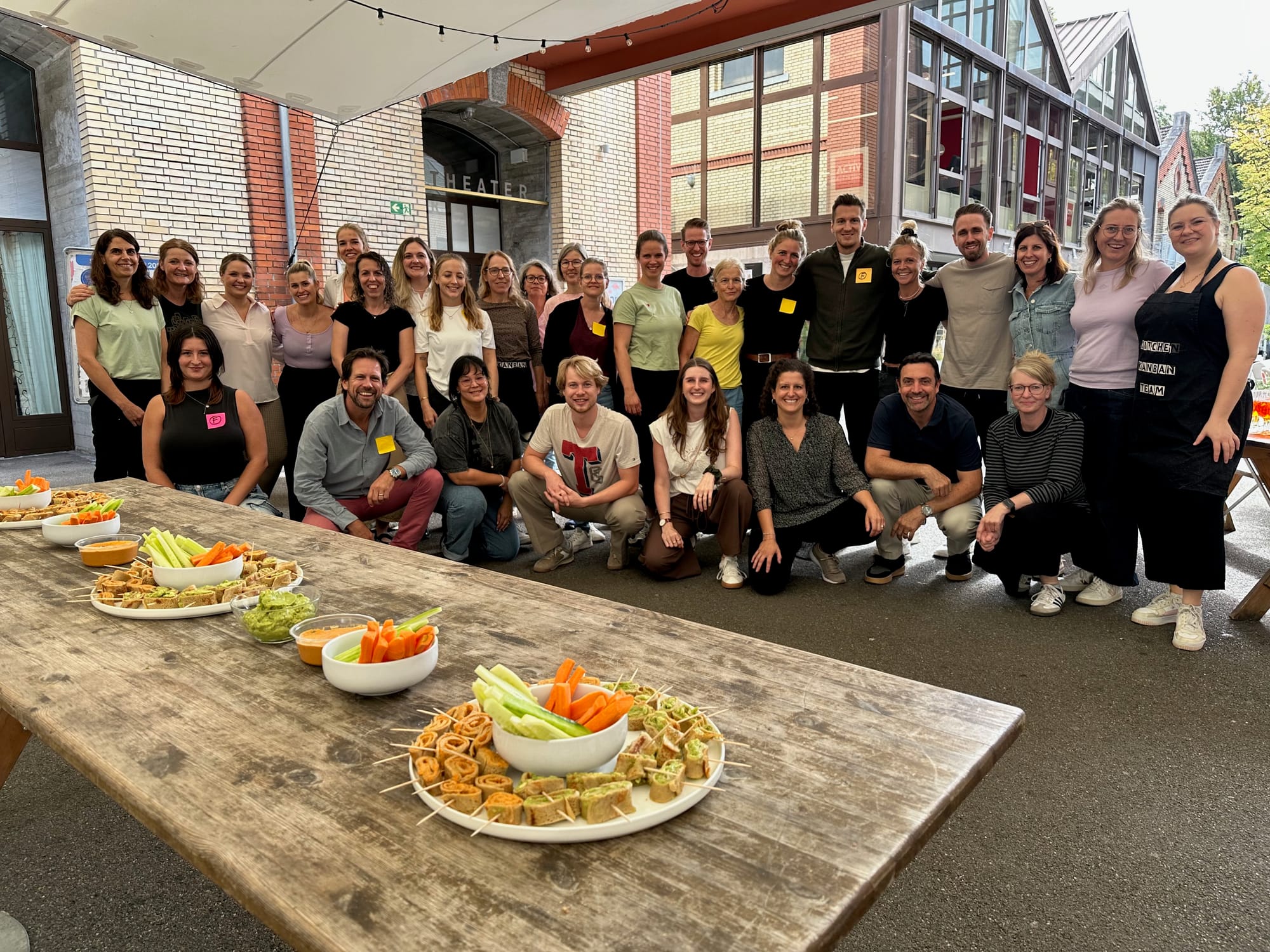
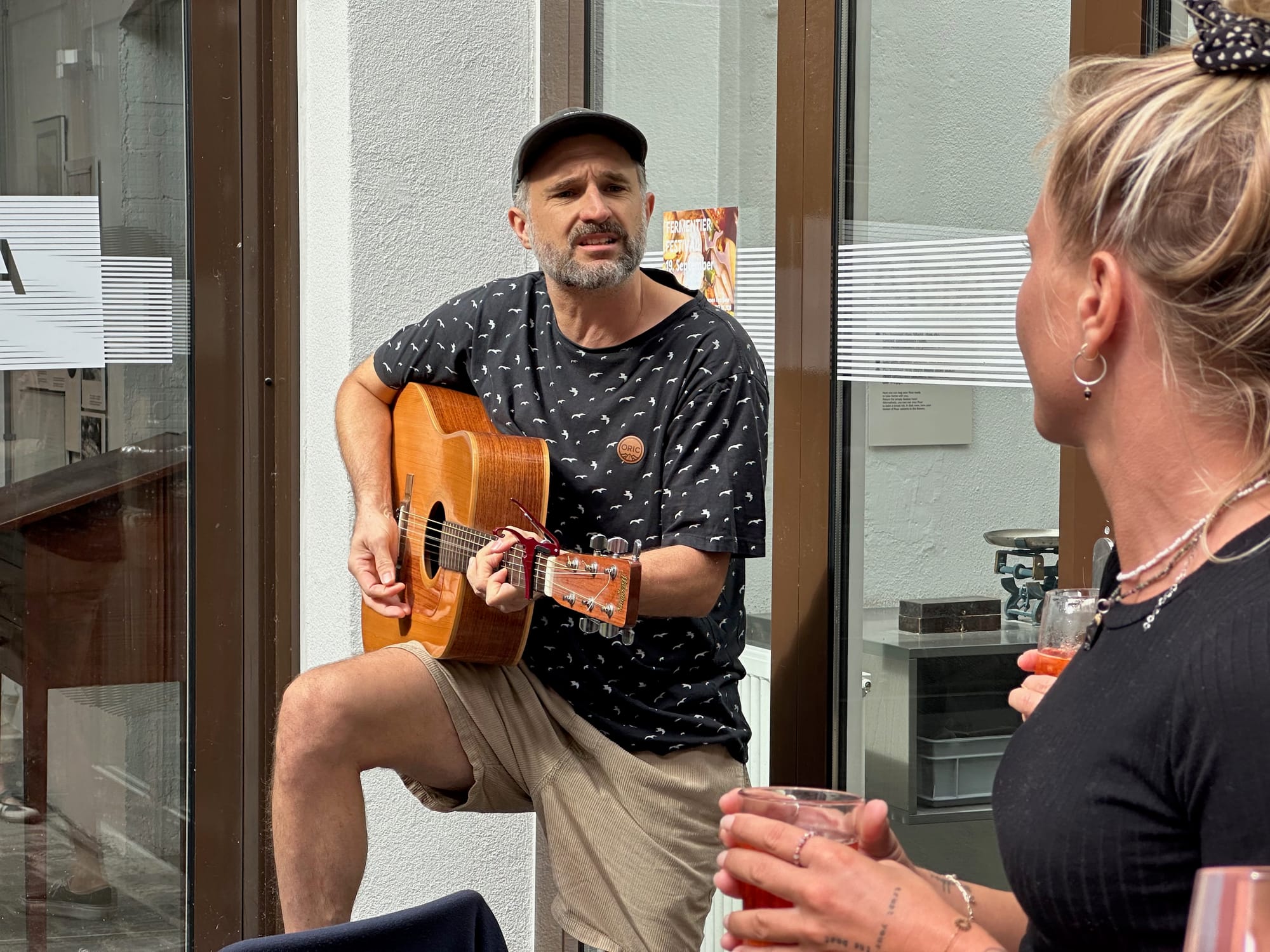
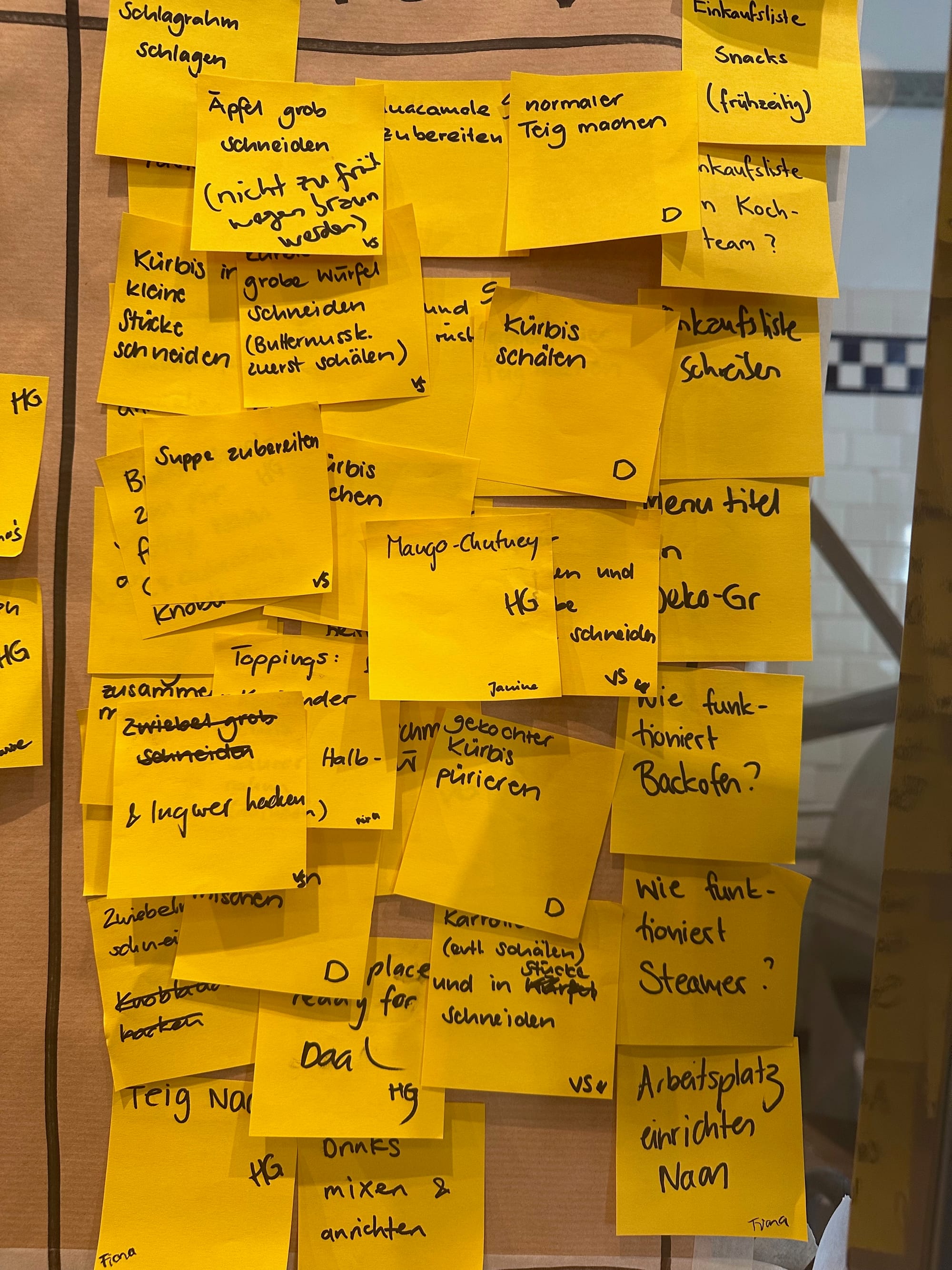
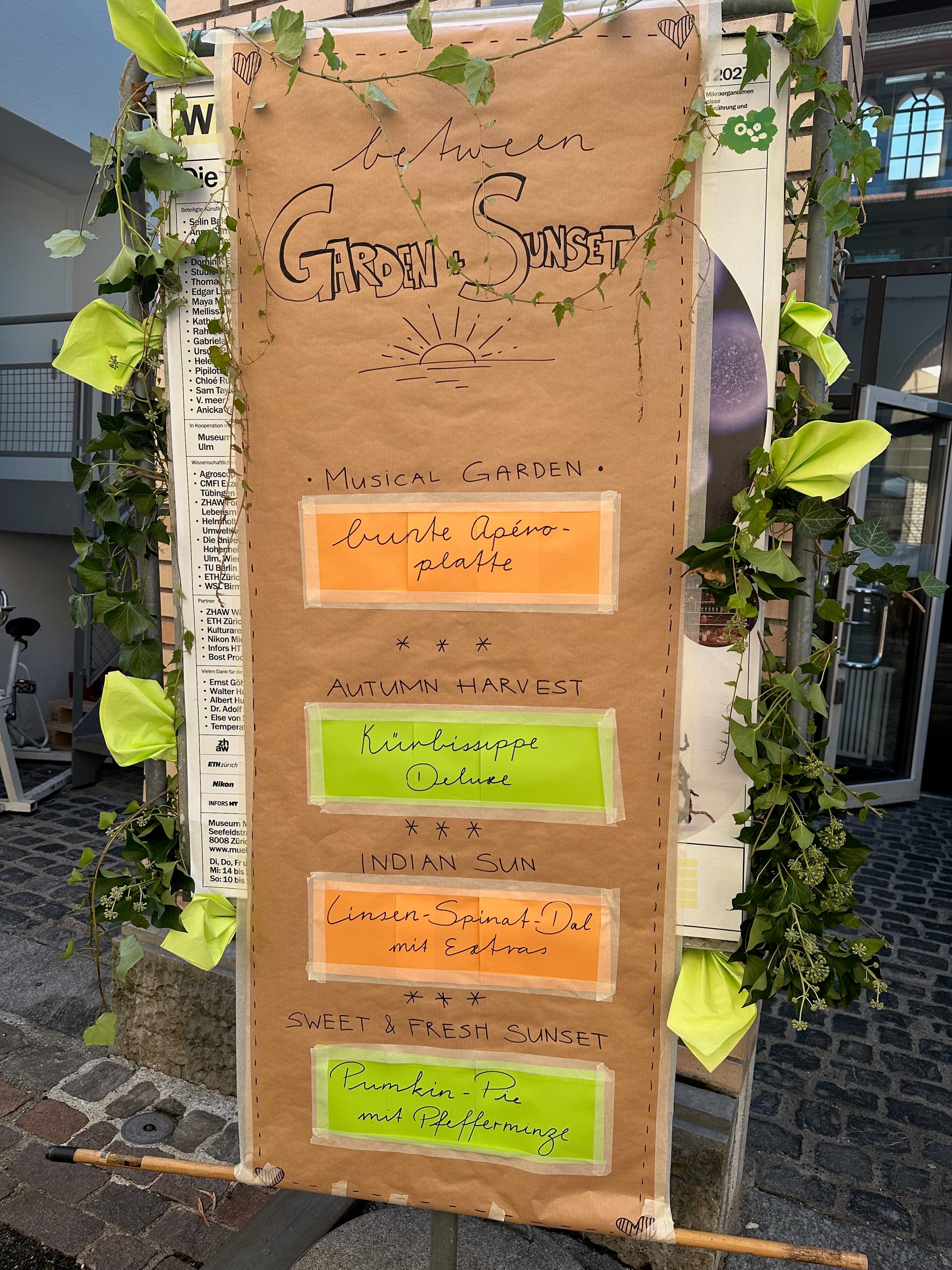
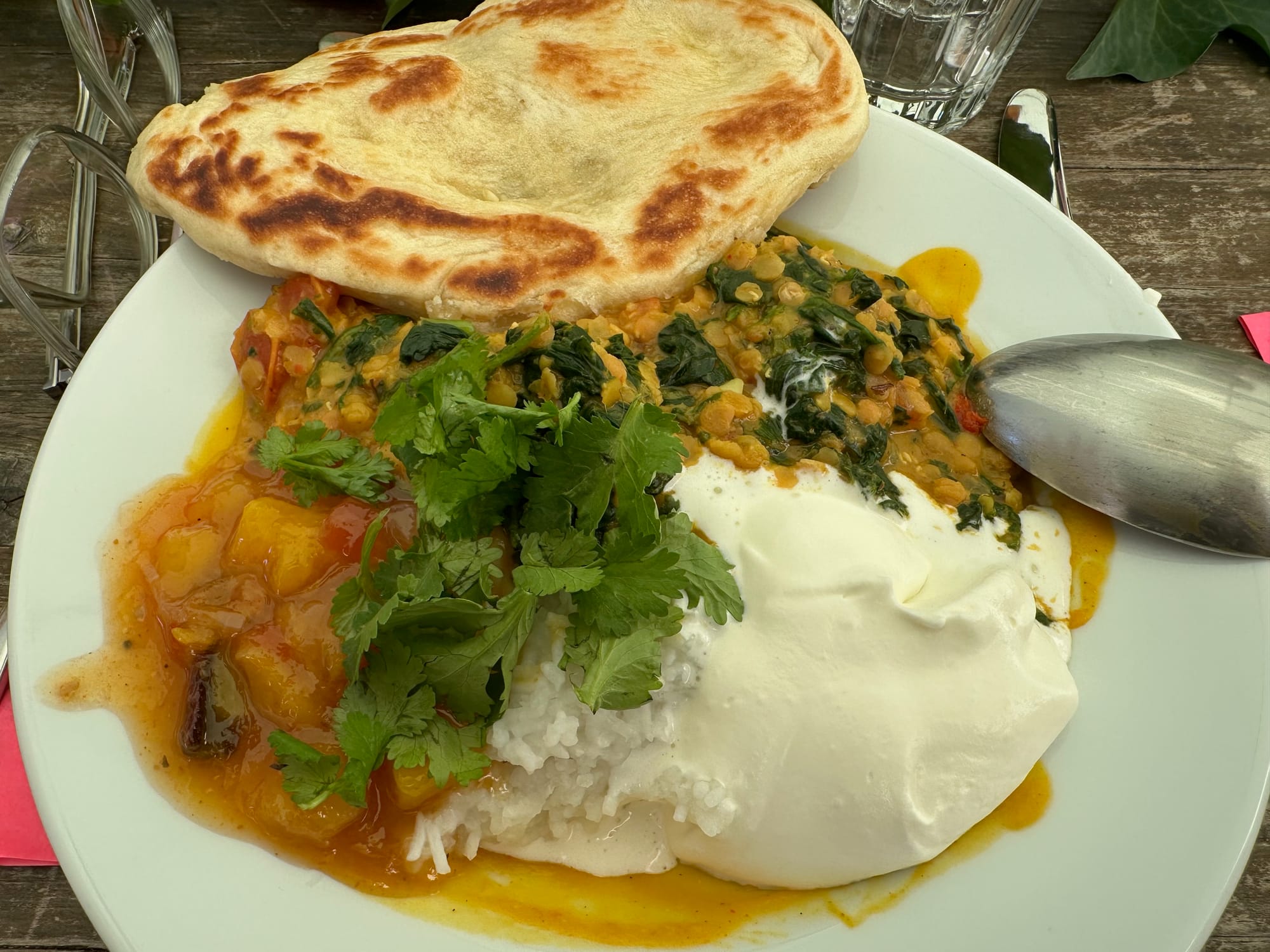
I always find it astonishing how a group of people can create a full meal from scratch, with entertainment and decoration, without anything being provided or planned beforehand. Thanks to Kanban, there is no chaos, and every team can write tasks they need help with that anyone, also from other teams, can pull and do.
At the end of such a session, people can't stop talking about how Kanban could help them in their everyday life, and so the idea is more transportable into the everyday than if I try to «teach» the method.
What does this mean?
Apart from this being something you can try yourself in order to bring Kanban and more flow to your own projects, I think this story is also a hint at creating more experiences with people rather than trying to explain something in theory and hoping that people start implementing it.
I have made the experience that a lot of people believe that having heard about something is already enough, that through hearing about a novel method, process or practice they are somehow inspired enough. Putting things into practice is much harder.
A few examples where experiencing things can be more valuable for your team than explaining:
👣 Doing a Get-it-done-session (a gathering where things that need to be done are actually done and finished, rather than talking about things that need to be done and then sending everyone away to do them)
👣 Holding an event or a conference without a group planning it and others joining it, but rather creating the event or conference together with everyone, from the moment everyone arrives. Try it out with a party, a dinner or something else small to give people a taste of what is possible.
👣 Writing a text together, in collaboration. Do it with a simple email or short text, inviting everyone on a google doc and writing the text together. Then, go to larger projects like a concept or even a book!
Of course, there are many more possibilities. But these three ideas, and of course Kitchen Kanban will create a sense of possibility of collaboration that probably was not there before and that has the potential to completely transform the way you and others work together to grow your small ideas into big fruitful things that change the world!
Member discussion